
Running a small business means managing customers, operations, suppliers, staff and cash flow at the same time. Accounting can easily become another time-consuming responsibility, especially as the business grows.
Choosing the right small business accountant in Croydon can make financial management easier, improve the quality of your records and help you stay on top of important accounting and tax responsibilities.
However, not every business needs the same level of support. A sole trader may only need bookkeeping and Self Assessment assistance, while a growing limited company may require annual accounts, Corporation Tax, payroll, VAT and ongoing financial advice.
This guide explains what small business accountants do, how accounting fees are determined and what Croydon businesses should consider before choosing an accountant in 2026.

What Does a Small Business Accountant Do?
A small business accountant does much more than prepare figures at the end of the year.
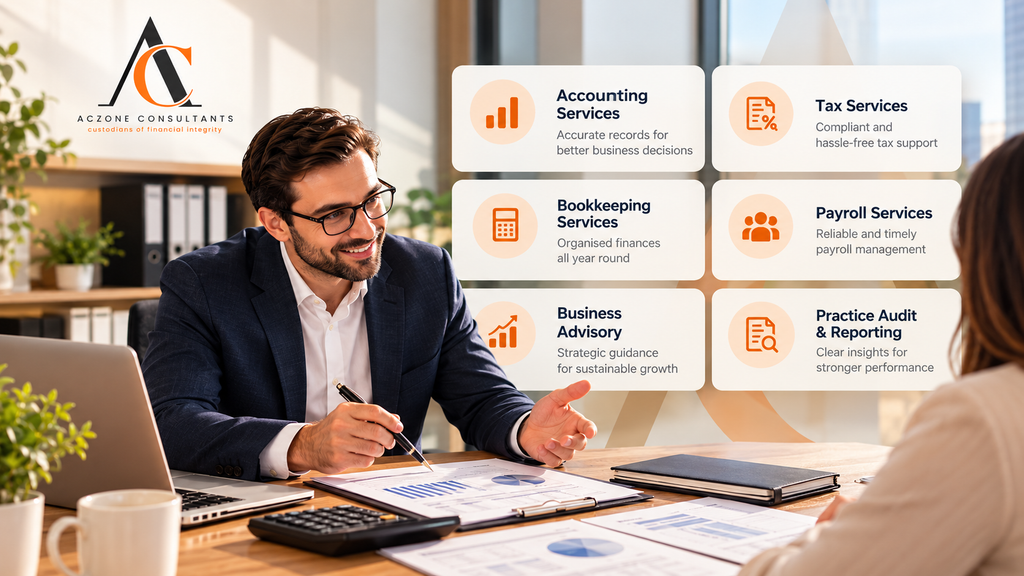
Depending on the business, accounting support can cover bookkeeping, annual accounts, tax returns, payroll, financial statements, company setup and business advisory.
The accountant’s role should be to keep financial information organised and help the business owner understand what those numbers mean.
For example, accurate records can help answer important questions such as whether the business is profitable, how much money should be reserved for tax and whether current cash flow can support expansion.
Aczone Consultants provides a range of accounting services for sole traders, startups, limited companies and growing businesses in Croydon and across the UK.
How Much Does a Small Business Accountant Cost in Croydon?
There is no single accounting fee that applies to every small business.
The price normally depends on the amount of work required and the complexity of the business.
A sole trader with a relatively small number of transactions will usually have different requirements from a limited company operating payroll, maintaining regular bookkeeping and managing several financial obligations.
Accounting fees can be influenced by:
- Business structure
- Annual turnover
- Number of transactions
- Quality of existing bookkeeping
- Number of employees
- Payroll requirements
- VAT requirements
- Frequency of financial reporting
- Complexity of tax affairs
- Level of ongoing advice required
Aczone Consultants offers fixed monthly pricing, with sole trader packages starting from £50 per month depending on the work required.
When comparing accountants, however, the lowest headline price should not automatically determine your decision.
A cheaper package may only include basic year-end work, while bookkeeping, payroll, VAT or additional advice may be charged separately.
The more important question is: what services are actually included in the fee?
What Accounting Services Does a Small Business Need?
The right accounting support depends on the stage and structure of your business.
A newly established sole trader may need only a few core services, while an established limited company may benefit from an integrated accounting package.
Understanding the main services available can make it easier to decide what your business genuinely needs.
Bookkeeping Services
Bookkeeping forms the foundation of reliable accounting.
It involves keeping an organised record of business transactions, including sales, purchases, expenses, supplier payments and customer receipts.
When bookkeeping is maintained consistently, it becomes much easier to prepare annual accounts and tax calculations.
Poor bookkeeping can create the opposite problem.
If transactions have not been properly categorised or bank records are incomplete, the business may need to spend considerable time reconstructing financial information at year end.
Aczone provides professional Bookkeeping Services to help businesses maintain accurate and organised financial records throughout the year.
For many business owners, outsourcing bookkeeping also saves time that can be redirected towards customers and business development.
Annual Accounts and Financial Statements
Annual accounts are an important responsibility for limited companies, but they should not be treated purely as a compliance exercise.
Financial statements can provide valuable information about how the business is performing.
They can help business owners understand revenue, expenses, profit, assets, liabilities and changes in financial performance.
Aczone’s Accounting & Financial Statements service supports businesses with year-end accounts and financial reporting.
The quality of these accounts depends heavily on the records maintained throughout the year.
This is why bookkeeping and year-end accounting should work together rather than being treated as completely separate activities.
Taxation Support
Tax is one of the main reasons small businesses choose to work with an accountant.
Depending on the business structure and circumstances, accounting support may involve Self Assessment, Corporation Tax, VAT or other tax-related obligations.
A professional accountant should help ensure that financial figures are based on accurate records and that relevant deadlines are understood.
The accountant should also be able to explain the tax position in clear language.
Aczone’s Taxation Services support sole traders, company directors, landlords, individuals and businesses with their tax responsibilities.
Combining tax services with bookkeeping and accounts can make the overall financial process more consistent.
Payroll Management
Employing staff introduces another layer of financial administration.
Payroll can involve salary calculations, PAYE, National Insurance, employee records, payslips and regular reporting.
For a small business owner, managing these requirements alongside day-to-day operations can become difficult.
Professional Payroll Management Services can help reduce that administrative burden and create a more organised payroll process.
Businesses with employees may also need to consider workplace pension responsibilities, making coordination between payroll and pension administration increasingly important.
Company Formation and Business Setup
Many new entrepreneurs focus heavily on registering the company but spend less time thinking about the financial systems required after registration.
A business may need to establish bookkeeping procedures, a business bank account, accounting software, tax records and payroll processes.
Getting these systems organised from the beginning is usually easier than correcting poor records several months later.
Aczone’s Business Setup & Company Formation service supports entrepreneurs who want to connect company setup with their ongoing accounting requirements.
This can be particularly valuable for business owners who are deciding whether to operate as a sole trader or establish a limited company.
Business Advisory and Financial Planning
As a business becomes larger, accounting becomes useful for much more than compliance.
Business owners need reliable numbers when making decisions.
For example, rising sales do not always mean cash flow is improving. A business may appear profitable but still struggle because customers are paying slowly or expenses are increasing.
Financial reporting and advisory support can help identify these issues earlier.
Aczone’s Business Consultancy & Financial Advisory service supports businesses with financial planning, cash-flow forecasting and performance analysis.
Good financial information gives business owners a stronger basis for making decisions about staffing, investment and future growth.
Does a Sole Trader Need an Accountant?
A sole trader does not automatically need an accountant.
Some business owners are comfortable maintaining their own bookkeeping and handling straightforward tax requirements.
However, professional support may become more valuable as the business grows.
For example, you may benefit from an accountant if bookkeeping is taking too much time, your income comes from several sources, you are considering changing business structure or your financial records have become increasingly complicated.
An accountant can also help bring bookkeeping and tax preparation together so that your tax return is based on organised records rather than last-minute calculations.
Does a Limited Company Need an Accountant?
A limited company can manage many of its accounting responsibilities internally, but company finances often involve more administration than a straightforward sole-trader business.
Directors may need to deal with bookkeeping, annual accounts, Corporation Tax, payroll and other company reporting requirements.
As these areas are connected, mistakes in one part of the accounting process can create problems elsewhere.
For example, inaccurate bookkeeping can affect year-end accounts, which may then affect tax calculations.
Many directors therefore choose to use professional accounting support even where they could technically manage some of the work themselves.
How to Choose a Small Business Accountant in Croydon
Choosing the right accountant should involve more than comparing monthly fees.
Start by looking at the scope of the service.
You should understand whether the fee covers bookkeeping, tax returns, annual accounts, payroll and ongoing advice, or whether those services are charged separately.
Communication is equally important.
A good small business accountant in Croydon should be able to explain financial information without making it unnecessarily complicated.
You should feel comfortable asking practical questions about your business.
For example, how much should you reserve for tax? Can the business afford another employee? Why is cash flow falling even though sales are increasing?
Your accountant should help you understand the financial information behind these decisions.
Why Consider a Local Accountant in Croydon?
Modern accounting software makes it possible to work with an accountant anywhere in the UK.
However, some business owners still prefer working with a local firm.
Having an accountant in Croydon can be useful if you value face-to-face meetings, local accessibility and a closer ongoing relationship with the person handling your accounts.
Aczone Consultants is based at 131 South End, Croydon, CR0 1BJ, while also providing services to businesses elsewhere in the UK.
For many businesses, the most effective arrangement combines digital accounting systems with access to professional advice when required.
Look for Transparent Accounting Fees
Businesses need to be able to budget for professional services.
If accounting fees are unclear, unexpected charges can become frustrating.
Before appointing an accountant, ask exactly what is included in the monthly fee.
For example, does the package include regular bookkeeping? Will payroll cost extra? Is tax advice included? Are there additional charges for contacting the accountant during the year?
Transparent pricing makes it easier to compare firms fairly.
It also reduces the risk of choosing a low-cost package that becomes significantly more expensive once additional services are added.
Check How the Accountant Communicates
Communication can have a major impact on the quality of the relationship.
A business owner should know who their main contact is and how they can get support when questions arise.
Waiting several weeks for a response can become a serious problem when a financial deadline or business decision is involved.
Before choosing an accountant, find out how the firm normally communicates with clients and whether advice is available throughout the year.
Accounting support should ideally be ongoing rather than limited to a conversation just before annual accounts are due.
Choose an Accountant Who Can Support Business Growth
Your accounting needs are likely to change over time.
A sole trader may eventually become a limited company.
A one-person company may begin employing staff.
A business may need more regular financial reporting or advisory support as turnover increases.
Choosing an accounting firm that offers several related services can make these transitions easier.
Instead of changing accountants every time the business reaches a new stage, you can expand the level of support as your requirements change.
Local Accountant vs Online Accountant
Both local and online accounting models can work well.
A fully online accountant may suit businesses that already manage their financial records digitally and do not require meetings.
A local accountant may be preferable if you value personal contact and want the option of discussing business finances face to face.
The decision should depend on your preferences and the level of support required.
For many Croydon businesses, a combination of cloud-based accounting and access to a local professional can provide both efficiency and personal support.
Is Hiring an Accountant Worth the Cost?
Accounting is a business expense, so it should provide value.
That value may come from saving time, maintaining more accurate records, reducing administrative pressure or providing better visibility over the financial performance of the business.
The value of an accountant should therefore not be measured only by whether they can submit a tax return.
A good accountant can also help you understand where money is being spent, what financial obligations are approaching and whether the business is developing in the right direction.
Instead of asking only, “How much does an accountant cost?”, consider asking, “What problems will this accountant help my business solve?”
That is often a better way to compare accounting firms.
Frequently Asked Questions
How much does a small business accountant cost in Croydon?
Costs vary depending on the structure and complexity of the business and the services required. Aczone Consultants offers fixed monthly pricing, with sole trader packages starting from £50 per month depending on the scope of work.
What services can a small business accountant provide?
Services may include bookkeeping, annual accounts, tax returns, Corporation Tax, payroll, company setup and financial advisory support.
Does a sole trader need an accountant?
Not always. However, professional accounting support may become useful as turnover, financial complexity or administrative responsibilities increase.
Does a limited company need an accountant?
A company may manage accounting responsibilities internally, but many directors choose professional support because bookkeeping, annual accounts and tax obligations can become complex.
Is a local accountant better than an online accountant?
Neither option is automatically better. The right choice depends on how you prefer to communicate and how much personal support your business needs.
Can I change accountants?
Yes. Businesses can change accountants. A new accountant can normally guide you through the professional handover process.
Is bookkeeping always included in accounting fees?
No. Some firms include bookkeeping within their package while others charge separately. Confirm exactly what is included before agreeing to a service.
Final Thoughts
Choosing the right small business accountant in Croydon is about finding the right combination of expertise, communication, transparency and ongoing support.
The cheapest accountant is not necessarily the best value, particularly if essential services are excluded or support is difficult to access.
A small business should look for an accountant who understands its current requirements and can continue supporting the business as those requirements change.
With bookkeeping, taxation, payroll, financial statements and business advisory working together, business owners can spend less time dealing with financial administration and more time focusing on growth.
Aczone Consultants supports sole traders, startups, limited companies and growing businesses with bookkeeping, taxation, accounting and financial statements, payroll and business advisory services.
If you are looking for a small business accountant in Croydon, contact Aczone Consultants to discuss the accounting support your business needs.